Buy, lease, or stagnate
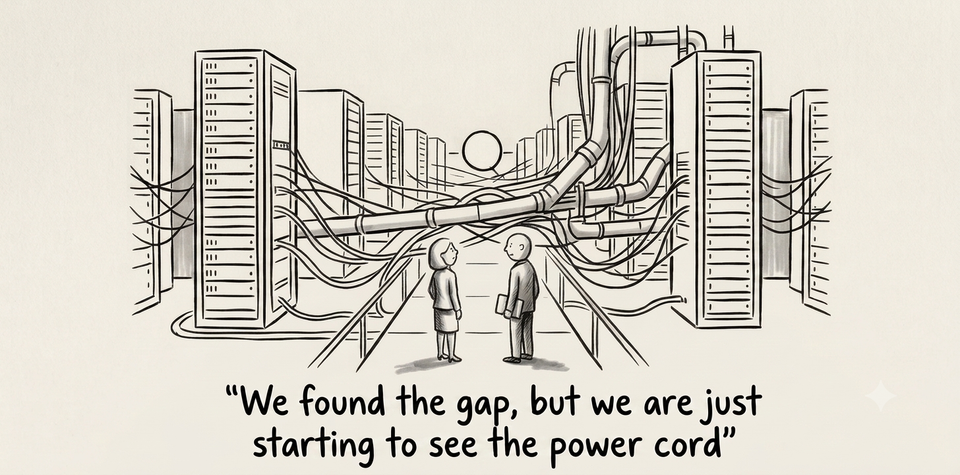
Philippine enterprises are facing an aggressive push to upgrade their infrastructure with the arrival of AI.
At the second Practical Insights, organized by ST Telemedia Global Data Centres, Chief Revenue Officer Chris Street identified infrastructure—raw compute, storage, bandwidth, etc.—as the “main barrier” to scaling AI adoption.
It is an understandable diagnosis from a firm expanding data center footprints. However, it is a consensus sourced from over 600 enterprise and digital-native leaders across nine Asian markets.
According to STT GDC’s joint study with Ecosystm published in April, Mind the Gap: Bridging the AI Infrastructure Readiness Divide, close to 90% of surveyed organizations have launched an AI project, yet very few have successfully transitioned from pilot tests into production environments. Many were classified as Builders, deploying AI at a very limited scale.
In the Philippines, 71% of organizations point not just to infrastructure, but also to talent and connectivity constraints, as to why 79% are stuck in the Builder phase.
These numbers may not seem new, as we have probably come across them when the report was first publicized by STT GDC early this year. What is new, perhaps, is twofold.
First, Street emphasized the Philippines as being in the same boat as the rest of Southeast Asia—that our AI readiness situation is not different from everyone else. Second, Street positions the country as ahead of the regional average, due largely to a citizenry that is more digitally inclined, a nation trained by its appetite for social media, e-commerce, and the like.
“The Philippines is a great place in terms of digital, and it always has been,” Street sums it rather encouragingly.
Other industry leaders who spoke at Practical Insights, none from STT GDC, separately affirmed the importance of foundational infrastructure as key to achieving AI-driven business ambitions. Each made the case for buying or leasing—access advanced models through hyperscalers, find the right partner, and lease colocation capacity tied to measurable business value, if running cloud or data centers is not your primary domain.
Later, as I was lining up for lunch, I curiously asked an STT GDC officer if scaling AI infrastructure is possible without purchasing capacity from a vendor. Her answer was straightforward: building it yourself is certainly doable, though likely more costly and falls outside most enterprises’ core business.
Come to think of it, the buy-or-build question is not really new and rarely that simple. Practically everyone has gone through it, like a rite of passage on the way to automating almost anything.
Swarm’s Philippine AI Report 2025 recommended building what one needs to own for the long haul and borrowing where speed matters most. Today’s technology is a target that is moving too fast, and accelerating progress is only possible if one can keep up, which makes engaging an external partner unavoidable.
Perhaps this is the real practical insight from the forum—not just how much rack space an enterprise should lease, but for what purpose, and whether their data architecture and team workflows are mature enough to utilize that capacity efficiently once the contract begins.
—
Written by Oliver Ortega. Ada is an experiment in AI-enabled journalism. It uses generative AI for structural and conceptual brainstorming, drafting and language refinement, research and fact checking, and image generation. All analysis, editorial judgment, and final content are the author’s, who assumes full responsibility for what’s published.